
Recently my sister asked me to reinstall the macOS High Sierra on her iMac because it stopped working correctly. I thought that it would be easy to do but I was mistaken. I successfully installed the macOS Mountain Lion (when using the NetBoot it automatically selects the version of macOS with which the iMac was shipped with). But then I was facing multiple issues trying to update macOS from Mountain Lion to High Sierra via the Mac App Store.
After downloading a copy of macOS High Sierra from the Mac App Store, I started installing the update. The Mac rebooted, and it seemed that everything was going well, but it was not. The progress bar did not move at all, or moved very slowly. I waited a few hours…
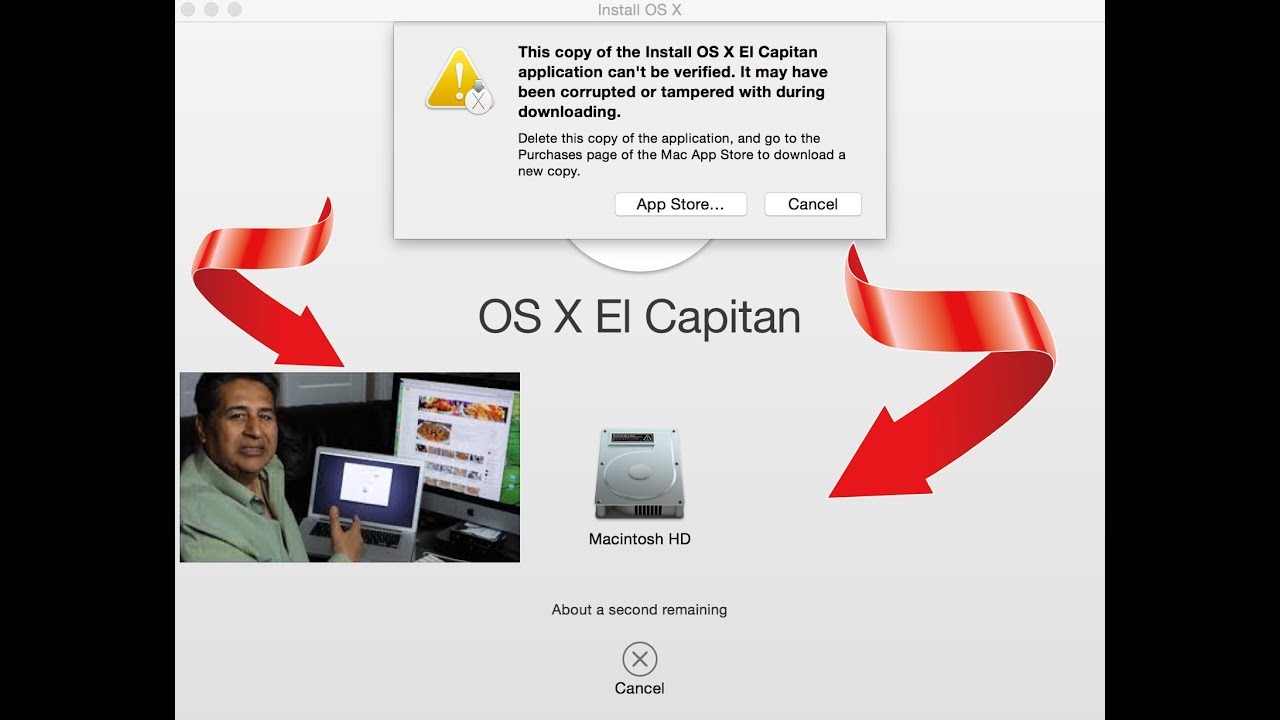
This happens on my 2 Mac's: a Mac Mini running Sierra and a MacBook Pro (13-inch, Mid 2012) running High Sierra Beta (17A360a). Update: I've just restarted the download and it estimates about 1 hour to download the 5GB of the installer. If I start another simultaneous download in the network (iOS update, for example), the transfer time starts. On the Mac App Store, you can't download previous versions of apps that would be compatible with previous OS versions. You have to update to at least Sierra in order for it to work.
I began to figure out what was going on and found out the following. Attempting to download macOS High Sierra from the Mac App Store I found that a small 19 MB version of the “Install macOS High Sierra.app” file downloads to the “Applications” folder, rather than the complete 5.2 GB installer file. That’s the problem.
The tiny 19 MB incomplete installer requires an internet connection during usage to download the rest of the High Sierra update files. Additionally, it does not allow me to create a macOS High Sierra USB installer drive for use on multiple computers.
I’ve found a new workaround, and in this tutorial, I’ll show you how to download the complete “Install macOS High Sierra.app” file from Apple server using the “macOS High Sierra Patcher” app instead of via the Mac App Store.
About the app
In this workaround, we’re going to use the macOS High Sierra Patcher app from the dosdude1.com. This app is intended for those with unsupported Macs and Hackintosh users, but any Mac user can use the app to be able to download the complete macOS Mojave installer file from Apple server. For our purposes in this particular walkthrough, we will use the app only to download the complete installer file.
Note! This method relies on a third party app from an unverified third party source. If you are not comfortable with using unvetted and unverified software, do not follow this process.
Let’s begin
Downloading the complete “Install macOS High Sierra.app” file from Apple server using the “macOS High Sierra Patcher” app is a really easy process. Now, step by step guide.
Go to the official website of the “macOS High Sierra Patcher” app here and download the app.
Launch the “macOS High Sierra Patcher” app.
Note! By default, macOS preventing apps from unidentified developers or sources from being launched. So you most likely will get an alert message that says: “macOS High Sierra Patcher.app can’t be opened because it is from an unidentified developer”. To allow just one specific app to run do the following:
- Hold down the
Controlkey and click the app icon. From the contextual menu chooseOpen. - A popup will appear asking you to confirm this action. Click the
Openbutton.
Ignore everything about patching, instead pull down the “Tools” menu and choose “Download macOS High Sierra…”.
Confirm that you want to download the “Install macOS High Sierra.app” file, and then point it to a location to save on the hard drive.
Close the “macOS High Sierra Patcher” app when the download is complete and locate the “Install macOS High Sierra.app” file you downloaded.
Conclusion
That’s it, you’re done. Now you have the complete “Install macOS High Sierra.app” file downloaded. So simple isn’t it?
You can confirm that you have the complete “Install macOS High Sierra.app” file by getting info on the file. For this simply select the file and click the Spacebar key (or right-click on the file and choose “Get Info”). The complete installer should be around 5.2 GB rather than the tiny 19 MB incomplete installer that requires additional downloads.
Note! Remember, the “Install macOS High Sierra.app” file deletes itself automatically after macOS High Sierra has successfully installed. Therefore, you may want to make a backup by having previously copied it to external storage.
Let me know in the comments section if you know another way to download the complete “Install macOS High Sierra.app” file rather than the tiny incomplete installer.
I hope this article has helped you learn how to downloaded the complete “Install macOS High Sierra.app” file from Apple server. If this article has helped you then please leave a comment
Thanks for reading!
Arthur is a designer and full stack software engineer. He is the founder of Space X-Chimp and the blog My Cyber Universe. His personal website can be found at arthurgareginyan.com.
Introduction#
This document explains how to install GNS3 using when a Mac OS X environment. You will learn how to:
- Download the required software
- Install the software
Supported Operating Systems#

GNS3 supports OS X Lion (version 10.12) and later. GNS3 v2.1.9 is the last version that runs on OS X version 10.11 (El Capitan).
- Video: https://www.youtube.com/watch?v=OFjt3jS3Mhg
Apple Mac Os Sierra Download
Download GNS3#

Follow these steps to download GNS3 to you MAC. Using a web browser, browse to https://gns3.com and click the Free Download link:
If you have not already registered on the GNS3 site, create an account and then click Create Account & Continue:
Or, if you already have an account, click Login, fill in the your details and then click Login & Continue:
After login, you will be prompted to select the version of GNS3 to download. In this guide, we will select the Mac installation. Click the Download button to download the Mac OS X package.
Allow installation of GNS3 before OSX Sierra#
GNS3 is distributed outside the Apple App Store. Due to this, you need to allow the installation of applications from anywhere.
Go to the Security & Privacy in System Preferences.
Click on the lock:
Select the Anywhere option under Allow apps downloaded from:
Installation of GNS3#
Click on the downloaded DMG and drag the GNS3 icon to the Applications folder:
Click on the Applications icon. Find the GNS3 icon and click it to start GNS.
Make sure GNS3 is installed in “Applications” to avoid any problem. It has been reported that the application may crash if launched from a path containing non-ascii characters.
If the following security warning is displayed (starting with OSX Sierra), click OK:
If the above security prompt was shown, right click on the GNS3 icon and click on Open:
This is required only at first launch. The next time you click on GNS3, the application will start normally as Mac OS X will remember the configured security settings.
Unlike for Windows and Linux versions of GNS3, the Mac version of GNS3 is not signed due to Apple restrictions.
If OSX say the .dmg is damaged and even right click is not working you could need to temporary disable gatekeeper and renable it. This seem to reset a cache in the OS. https://www.tekrevue.com/tip/gatekeeper-macos-sierra/
Once GNS3 starts, you will be prompted to allow root uBridge. This is required to allow GNS3 to control your network. Click Yes:
You will prompted twice to enter your root password:
GNS3 Setup Wizard#
The GNS3 Setup Wizard will display:
Download Mac Os Sierra 10.12.6
You now need to make a decision and then you can return to this document to complete to create an initial GNS topology:
Mac Os Sierra Download Usb
- If you are unsure, click here
- If you are going to only use Cisco IOS images, use the Local server and click here for instructions
- If you are going to use IOSvL2, IOU, ASAv or create complex topologies, then use the GNS3 VM and click here for instructions.